




What’s next for the Bialowieza Forest?
Poland has two natural areas listed as UNESCO World Heritage Sites: the Bialowieza Forest and the primeval beech forests in the Polish part of the Carpathian Mountains. Poland has a duty to protect them. There is no problem with the beech forests, as they are entirely under the Bieszczady National Park.
Worse is the Bialowieza Forest (63 hectares), 10 hectares of which belong to the Bialowieza National Park, while the rest grows on the territory of three State Forest districts. In addition, it includes a nature reserve, Natura 2000 areas, ecological grasslands, more than 1,100 natural monuments, a three-zone Promotional Forest Complex, protective forests, game refuges, also three zones of the Biosphere Reserve, and finally the Bialowieza Forest area – a UNESCO site.
These units differ in their methods of protection and use and management, competencies and interests mix, and the wilderness suffers. Some of its users are calling for a 30 percent increase in wood intake. And the introduction of hunting in the reserves. Yes, you read that right: hunting in reserves.
Two strikes
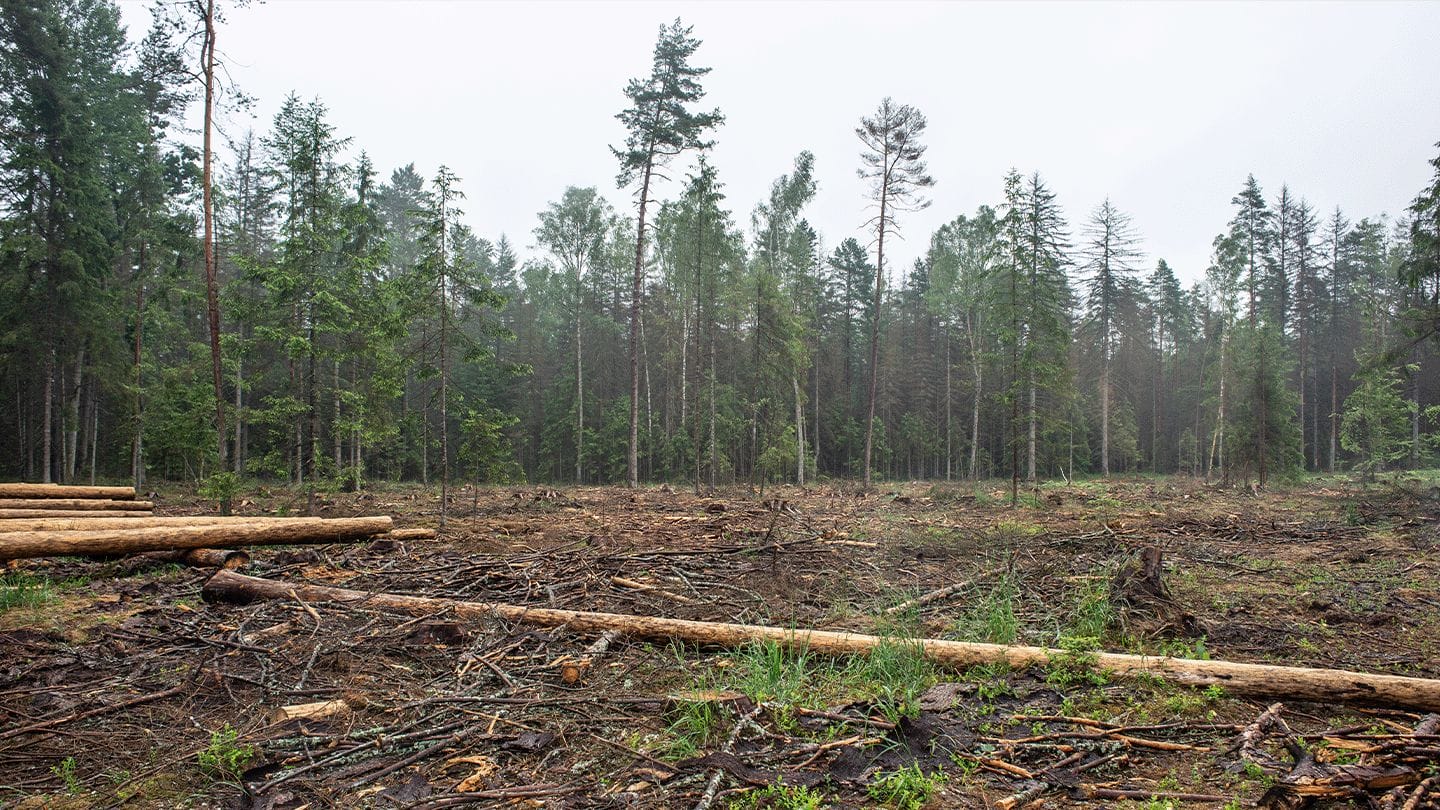
Forest districts want to harvest timber. 2017 saw the first major blow. Under the guise of fighting the print bark beetle, the State Forests brought harvesters into the forest and cut down 1,000 trees a day, for a total of about 200,000. This can be clearly seen in the photos. Where previously there was a compact primeval forest, a huge breach yawns in the middle, the area devastated, smashed. The cuts took place during the breeding season. And there are more bird species in 30 hectares of wilderness than in the whole of the United Kingdom, as Prof. J.D. H. K. H. S., a member of the committee, argued during a committee meeting in the Senate. Michal Zmihorski of the Institute of Mammalian Biology of the Polish Academy of Sciences.
I write “under the guise of fighting the print bark beetle,” because photos of these cuttings show that completely debarked logs were leaving the forest. The bark, along with this bark beetle, was left in place.
The rampant devastation was stopped by public protests and a CJEU ruling. The breach in the forest, however, remained. Even then, UNESCO representatives visited the primeval forest and wondered whether it still met the conditions to remain on the list of the world’s most valuable natural areas.
The second blow is the construction of a barrier on the border with Belarus. 158 km, first razor wire, then a metal dam, on concrete foundations.
How great the scale of the concertina coil disaster was is difficult for biologists to assess, because at the time the area was under a state of emergency zone and it was impossible to go under the border. However, it was possible to document animals to whom the concertina appeared to be an obstacle that was not very solid and openwork and tried to overcome it, entangling themselves in it and bleeding to death.
We also know – this was discovered by activists providing humanitarian aid on the border – that coils of razor wire were also hidden underwater, in rivers, in swamps.
The fence cut the Belovezhskaya Pushcha in half, at the same time cutting the trails of animals, which, after all, do not ask whether this piece of forest belongs to Lukashenko or not. Local routes of territorial animals, such as the lynx and wolf, but also the east-west mammal migration route.
On top of that, the forest ducts have been widened, and new ones have been created to make it easier for the army, concrete mixers and cranes to enter – again, devastation and logging. Since the fence is proving to be as forcible as possible, Minister Maciej Duszczyk has already announced the transfer of millions more to improve the structure: more concrete, more steel.
All this in the name of state security. It only begs the essentially rhetorical question of whether surely a fence whose bars can be bent, which doesn’t work and can’t work because one hasn’t yet been created that will keep out people determined to survive – is better for our safety than dense, dense wilderness and swamps.
If it doesn’t stop unarmed migrants, will it stop the enemy army’s tanks? Probably not. In turn, it would definitely hinder the march of the wilderness. From this perspective, all widened roads, forest ducts, poured asphalt and cut trees are a gift to the enemy army.
Since security is what we should be forging political solutions around at the moment, perhaps the wilderness should also be looked at from this angle.
Unify the protection of the Bialowieza Forest
Meanwhile, the meeting around the Bialowieza Forest protection project took place at a meeting of the Senate Climate and Environment Committee, without representatives of the Interior Ministry or the Defense Ministry. But this is a step forward.
The originators presented the concept, which was worked on for four years by the Workshop for All Beings, scientists, lawyers and senators. The project envisages the establishment of an institution separate from the existing managers of the site, with the goal of protecting the World Heritage natural site. This is the last moment, because after two blows, the effects of which will be felt by the primeval forest for a long time to come, everything must be done to prevent it from further devastation, which would contribute to its removal from the prestigious list, but above all would be a severe and irreversible loss for Poland and the world in the foreseeable future.
Mec. Karolina Kuszlewicz, describing the draft resolution to create the institution, stressed that it reflects a new concept of thinking about the Bialowieza Forest as a whole. Under this law, a valuable whole, or about 60,000 hectares, must be taken out of forest management.
The same view was held by Prof. Bogdan Jaroszewicz of the Bialowieza Geobotanical Station of Warsaw University, who became deputy director general of the State Forests a day earlier. He said that there is a significant conflict between the laws requiring foresters to manage forests, logging, restoration or hunting with the UNESCO Convention.
Such a willingness to give up three forest districts from under its management is a novelty in the State Forests, closely linked to the political change. The previous management board, in the person of Jozef Kubica, among others, held the side of Solidarna/Suwerenna Polska politicians, arguing that the European Union wants to destroy Polish forests. “The CJEU is attacking Polish forests!” – they proclaimed at conferences and in the media, insisting that the CJEU’s verdict in early March 2023, stating that LPs are not complying with the law, is in fact an attack on the Polish economy, and even an attempt to take away a quarter of Poland’s area.
They also argued that it was the previous CJEU ruling, in 2017, which stopped the logging of the Bialowieza Forest, that contributed to its demise.
“There will be a problem!”
Instead, the language of the State Forests from the Solidarna Polska era was spoken by local government officials present at the committee meeting. The basic premise of the LP is the belief that without the State Forests, Poland’s forests will be lost. That there is a need for forest management, sustainable of course, which serves the needs of logging in one and the same area, that is, the economic function, as well as the social and protective function.
Podlaskie provincial councilor Nikolai Janowski said that the Bialowieza Forest is dead, completely dead. And that’s because the 2017 cuts were stopped. He invoked the tradition of generations who knew how to manage the wilderness. Asked by me whether it would surely be good for the region if everyone believed that the Bialowieza Forest was already dead and there was nothing to protect, he replied that it was necessary to widen fire roads, in case lightning struck, and mow meadows. He also complained about the bison, two to be exact, one of which had recently died when hit by a speeding military vehicle in Old Masievo, and the other was watching by his side. I found a similar argument in a discussion about the bill on Facebook: the bison wouldn’t come to the countryside if there weren’t so many rotten trees in the forest.
At an election meeting, even before the bill was announced, the mayor of Dubicze Cerkiewne threatened residents that “we will live in a reserve.”
In general, local government officials were affected by the fact that no one discussed the project with them, although the committee chairmen stressed that this discussion was just beginning. The head of the Hajnówka municipality, Lucyna Smoktunovich, immediately announced that “there will be a problem!”. And it’s already apparent that local government officials will make sure there is a problem. At FB of the Bialowieza municipality appeared an eight-point form for collecting signatures:
1. I am against the creation of a company from the State Forest Holding Company. 2. I am against the enlargement of the Bialowieza National Park. 3 I am against the liquidation of the forest districts of Białowieża, Browski and Hajnówka. 4. I am against the liquidation of the Bialowieza National Park. 5. I am against the bill on the UNESCO World Heritage Site Bialowieza Forest. 6 I am in favor of protecting the Bialowieza Forest. 7 I am in favor of the decisive role of local governments and residents of the Hajnówka region in the protection of life in the district areas. 8 I am in favor of the traditional way of life and use of the resources of the Bialowieza Forest, ensuring the preservation of our heritage.
Under the list, there is no information on who collects and disposes of these signatures. When I called the Bialowieza municipality office, I learned that only the mayor was speaking about the list. However, Mayor Albert Waldemar Litvinovich was unavailable despite subsequent phone calls.
Why are they collecting signatures against the bill instead of releasing information about it? Why does the set of questions suggest that a law extending uniform protection to the wilderness, due to a UNESCO site, threatens the security of the wilderness, and that the authority of forest districts and local governments protects it? What is the point of point 7, concerning the protection of life? You can see the interests of the LP, hunters, then maybe this is a point from the Church?
Because what the attitude of local government officials reveals is a strong local lobby, under whose long-standing rule municipalities are depopulating. As many as four out of the ten municipalities with the highest population loss from 2011 to 2021 lie in Hajnówka district. It doesn’t matter that residents are getting fewer and fewer, that there is a shortage of jobs, no sewage system, no care for the elderly – what matters is that local shuls hold on tight. And locally, a permanent job can give the National Forests – the average salary is 10,441 zlotys, border guards, and once someone makes it, and there is an audi in the yard – hunters come to visit and invite them to the club, in which probably and policeman, and fireman, and mayor, and veterinarian.
It’s them, not the locals, who don’t like the idea of putting the entire Bialowieza Forest under protection, because there will be nowhere to cut and no place to hunt.
On Sunday, February 18, less than a week after the Senate committee meeting, a conference, heralded by a photo of withering spruce trees, is being held in front of the city hall in Hajnówka. “Show whether you are in favor of expanding the Park or creating a new ‘creation’! They say there are only 2 percent of us!” – invites Mayor Smoktunovich. Under the post, a comment about injustice and “Judas laws.” The 2 percent is based on the latest IPSOS poll, in which 98 percent of Polish women and men voted in favor of protecting the entire Bialowieza Forest.
In the end, according to Paulina Siegien, who was present outside the Hajn闚 town hall at noon on Sunday – there was actually an election rally by Law and Justice.
– They were supported by the activists of the so-called “The People’s Republic”. national Hajnówka, that is, the people who are behind the march held for several years in a row in Hajnówka, which paid tribute to the criminals of the Rajs “Bure” unit, who murdered the inhabitants of the surrounding villages after the war, Paulina tells me.
– In total, there were about a hundred people outside the office, yet the organizers claimed to represent all residents. Those present there said outright that they were defending the jobs of their friends from the State Forests,” says Paulina Siegien. – I walked out with a piece of paper on which it was written how much is the average salary in state forests for 2022. That’s 10,441 zlotys. I wish the residents of Hajnówka, their children and grandchildren, who today flee the region, could count on such earnings. At the moment, a rural school can offer a psychologist 800 zloty gross, while many people in Hajnówka earn the lowest national salary. Revenue from the forests comes only from foresters, who since 2017 have maintained an arbitrary ban on entering the vast area of the Bialowieza Forest, which prevents residents from, for example, picking mushrooms under threat of punishment, Siegien reminds us.
And I will remind you that the ban on entering the forest and picking mushrooms was supposed to be a consequence of the takeover of Polish forests by the European Union – something that foresters and Solidarna Polska politicians were threatening.
Do the local municipality officials really not see an interest in a UNESCO World Heritage Site in the area, tourism, sports, agritourism? They think the young will come back under the condition that there will be work for the pilots?
Who will pay for it?
Meanwhile, the law protecting the UNESCO World Heritage site Bialowieza Forest takes into account local interests. In this concept, the management is to be carried out by the Scientific Council, which prepares the project and revises it every five years, but alongside it there is to be an opinion and advisory Local Government and Social Council, which would include local government officials, NGOs, tourism organizations.
The wilderness would continue to be cared for by the Forest Service, as in a national park, and money for funding would come from the Forest Fund. 150 percent. Forestry tax from the area would be received by local governments, on top of which 50 percent would be received by the local government. money from making the forest available to tourists. The reaction of local government officials to the idea was also characteristic: “it’s filling the pockets of a thief,” was the accusation, because not only would three forest districts be taken away from the LP, but they would also have to pay for it. The chairman of the meeting had to remind at this point that the forests are not owned by the State Forests, the owner is all of us, the citizens.
However, there are other ideas as well. Marek Wojcik proposed a solution similar to that of Oswiecim, as the local government where the Auschwitz-Birkenau museum, also a UNESCO-listed site, is located got a multi-year support plan from the state budget.
The Ministry of Environment and Climate is working on the Constitution for the Bialowieza Forest, and an investment plan for local governments has been prepared, assuming PLN 2.6 billion in investments.
Certainly the region deserves support. The pandemic and then the creation of a state of emergency zone and the arrival of troops tracking migrants have almost completely destroyed tourism. There’s also the threat of a new proposal that Bialowieza National Park staff are pointing to – a political one. If the protection afforded by the National Park is taken off the Forest now, won’t it occur to someone in a few years, with a possible change of government, to carry out another law that is truly threatening to the Forest?
Perhaps it is the region’s long-standing development plans, funding tied to the presence of the UNESCO Heritage Site, that could secure the project. On top of that, if the value of wilderness protection is recognized by the ministries responsible for defense, and in a few years it turns out that tourism is more beneficial to the region than industrial development – comprehensive protection will no longer bother anyone.
Funded by the European Union. The views and opinions expressed are those of the authors and do not necessarily reflect the views of the European Union or the Directorate General for Economic and Financial Affairs. Communication Networks, Content and Technology. Neither the European Union nor the funding body is responsible for them.