




Femininity as denial of masculinity and other problems with “Poor Things”
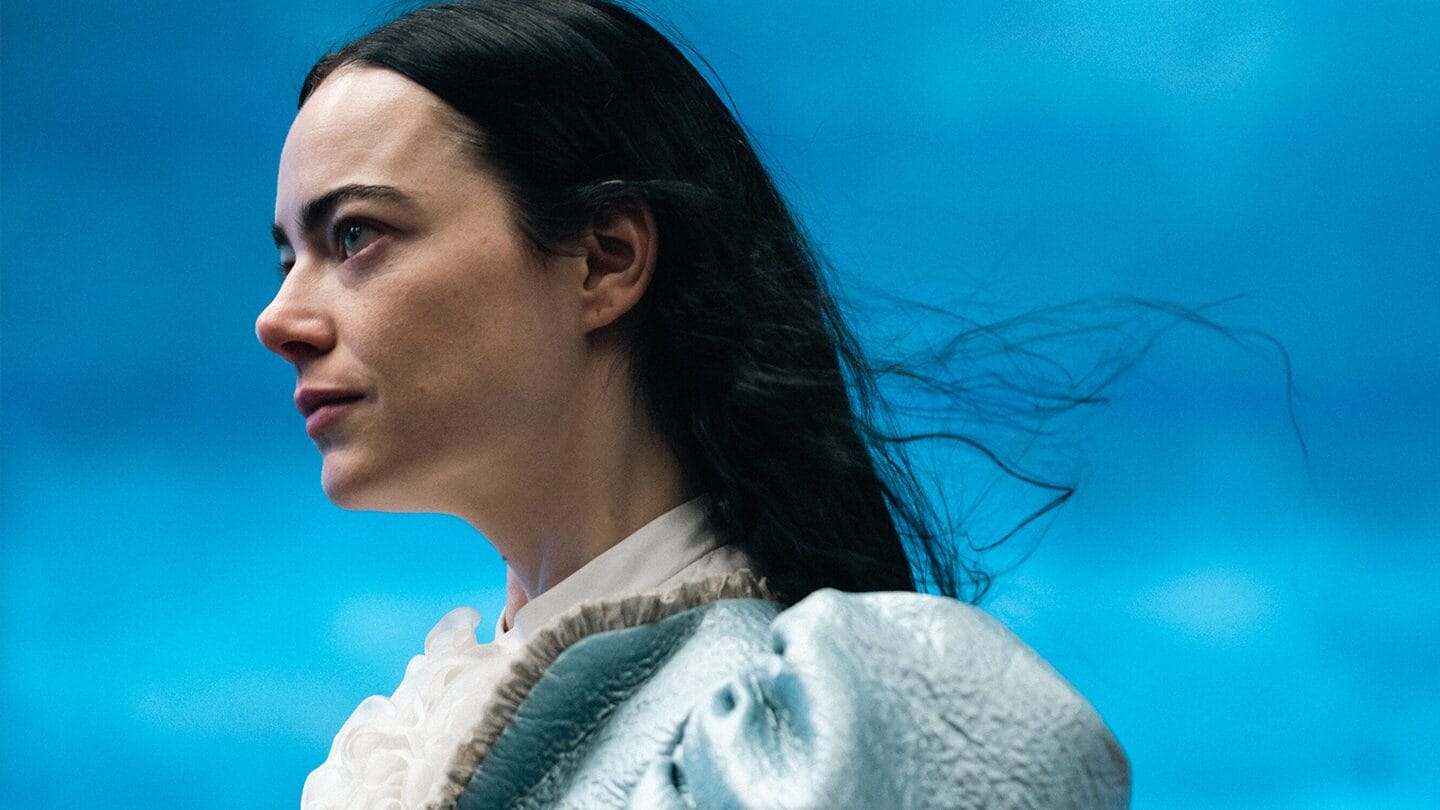
I am not one of the viewers who is naive or demanding to the point of going to the cinema for entertainment with the hope that I will get, for example, a revolutionary story about women’s liberation. But since this is how Jorgos Lanthimos’ latest film, which is vying for major industry awards, is promoted and described in reviews, it’s hard to get away from talking about that dreaded gender.
The success of Barbie, outclassed by “Poor Things” in the fight for the Oscars, has shown that feminist marketing – regardless of whether it actually has anything to do with feminism – simply pays off. Ba, he can – as Paulina Zagorska told me recently – sell more than one crap in pink paper.
However, as Asja Bakić points out on Kulturpunkt, the most important film award will most likely go to “atypical doll Emma Stone [who plays the main character in Lanthimos’ film – author’s note], while typical Barbie, Margot Robbie, is not even nominated in this category.” Many people praise the Academy’s choice. Bakić believes wrongly.
I myself, despite my love of pink, am not enthusiastic about Greta Gerwig’s picture, but I agree with the reviewer cited here, who writes: “If by some chance Poor Things actually adapted the book by Scottish writer Alasdair Gray, I would understand and support this praise, but since Lanthimos used only part of this novel, and the worst part, I have no choice but to be a rude dolt writing a negative review of a poor male art film.”
I guess that makes two of us, Ms. Bakić.
Dimension of unadorned (patriarchal) armor
Personally, however, I would not complain to those responsible for promoting the film, because even before buying tickets I rather believed those reviews in which “Poor Things” were called“Barbie for intellectuals” (although now I see how much sexism is in that comparison). Other recommendations persuaded me to treat Lanthimos’ story as cinematic escapism in its purest form. I can’t deny it – the worlds shown in it, thanks to the meticulously crafted visual treatments and the efforts of the costume-scenography team, truly transport you to another dimension.
Hip-hop star Mezo would sing that it’s “a dimension devoid of armor, which everyday life ruthlessly hits.” But I think Lanthimos’ tragedy lies in his inability to rid himself of the armor of patriarchy, even though for at least half of the screening he tries to convince us that the opposite is true and that here he is affirming femininity on screen as a man. Of course it’s dismantled. In turn, he reiterates in interviews that regardless of gender and despite the stinging binaries in the film, he is primarily interested in human beings.
Before I can realize that it’s nonsense, I’m having a great time. The excellent soundtrack caresses my ears, the painterly scenes please the eye. Admirable acting makes it possible to forget that I am watching such familiar faces. These are assets that cannot be overestimated.
I believe Emma Stone’s twistedly pacing is Bella, a being with the brain of a child and the body of a mother of one. In Willem Dafoe I see Dr. Goodwin Baxter, and not only because of the characterization, although it must be written that it is crucial to the plot. The protagonist’s face and viscera were deformed as part of numerous experiments conducted on him by his own father, also a scientist. However, Baxter is a hero incapable of understanding the injustice done to him in the name of scientific achievement and confirmation of the greatness of the individual’s genius. It’s no surprise, then, that he follows in his parent’s footsteps to undergo transplants and other treatments in the lab for more creatures, and eventually bring to life his most outstanding creation, Bella.
Maybe she will finally understand what actually happened (her will and choice were taken away from her, as she was brought back to life after she threw herself into the abyss as a pregnant woman), and break this chain of – how else – violence?
I’ll satisfy your curiosity: no, she doesn’t, although she theoretically frees herself from the golden cage of Baxter, whom she calls god and daddy, only to be trapped on the ship of (in)love, on which she makes voyages partly at the expense of Duncan Weddeburn (played by Stone and Dafoe’s indomitable Mark Ruffalo), and then in a marriage of convenience alongside Max McCandless (also a nod to Ramy Youssef, who plays him). Especially the first of Bella’s chosen ones (because the second one camouflages himself very well as this progressive dude who supposedly knows what fledgling gender equality is, but actually drools at the sight of a naked breast) seems the embodiment of toxic masculinity.
Feminism is not retaliation against men
A playboy – though I should rather write groomer – toying with a teenage girl in the body of an adult woman, at times (though completely unconsciously) crumbles the monument erected to the splendor of her gender, and could herald that Lanthimos has read bell hooks and realized that patriarchy hurts everyone. But in doing so, Weddeburn exposes himself to ridicule, something that “manly men” fear most.
This is what happens when the protagonist turns out to be a man, that is, when after an orgasm – surprise – he does not have an erection and when he allows his feelings to come out. A feminist familiar with the theory of intersectional feminism would say that these are not reasons for mockery, but issues that need to be normalized and the pressure and fear of ridicule removed from men. It is on which the oppressive system of domination of the strong over the weak is based. Also strong men over weaker men.
Lanthimos, however, understands the pursuit of equality and feminism as a woman’s retaliation against men and a mockery of the underdevelopment of masculinity, while trying to be exactly like a man. But perhaps, indeed, when you have no other tools, derision becomes the only effective weapon? Maybe in other cases. Here, even though Wedderburn should arouse our distaste because of the manipulation he commits against Bella, we are supposed to giggle at the fact that the guy has emotions he can’t handle, and that he doesn’t stand up after ejaculation (ever heard of extracorporeal sex, Mr. Director?).
However, to the wise and clinging malcontent in myself, I told her at this scene to hold her horses of judgment just yet. Lanthimos may be making clichéd male cinema, but after all, time and again he treats the audience to his creativity, creating a fascinating and downright fabulous picture. But – as fairy tales go – beyond the aesthetics, it is stuck in the rigid framework of a very unmodern, even if supposedly reaching for women’s emancipation and sexual liberation story, which on top of that – like Disney’s – ends with a trite “and they lived happily ever after.” Though not those to whom Bella, imitating her daddy, will be transplanting brains.
Freedom means masculinity
I can’t get rid of the impression that Bella, although she makes all sorts of attempts at self-determination, is just a product – on the one hand of icky and lolita-like (after all, for at least half of the film we are watching a de facto child and teenager in the body of an adult woman) fantasies, and on the other hand of very intellectually shallow male ideas about how a woman can build her subjectivity.
Shallow, because it is limited to sex, which is combined with a fairly common belief on the liberal side that – here I will use a quote from the book Aces. What asexuality can teach us – “political radicalism is linked to a person’s sex life.” At the same time, Lanthimos’s femininity is exactly what the classicist Simone de Beauvoir means by the other, different gender, i.e. a denial of masculinity, everything that is non-masculine and therefore inferior, in addition uplifted by the inflantilization (the combination of woman and child figure) so popular in the culture.
Bella, to get a taste of freedom, must be a man. To behave like him, to use socially recognized masculine attributes, to follow in his footsteps and achieve exactly the same, and to enter the patriarchal institution of marriage. Had this been a historical film, I might have been less critical, because the 19th century didn’t offer many options for a safe life outside of a relationship with a man. This is no longer the case, and sending heroes into the past has, in the words of Aleksandra Krajewska, “allowed Lanthimos to avoid open political declarations.”
The same author insists that Poor Things should be read non-feminist. But it’s hard to ignore issues of gender and inequality, knowing that, after all, growing up and breaking out into independence as a man would look very different from that presented in Bella, who is drowning in frills and petticoats and shown naked disproportionately more often than male characters. Of secondary importance then would be, for example, beauty and the body, which are essentially her most important assets.
In addition, Lanthimos in no way dilutes gender differences, but rather highlights them, not allowing the main character to transcend the determinism of the male-female balance of power. Bella – like women today – can be a man, put on pants and receive benefits because of it, but no longer men under any circumstances have the right to dress, that is, to step out of their roles without being considered unmanly, without being accused of ridicule and the title of castrati.
Emancipation as extreme individualism
Despite the fact that the heroine costs her life outside the laboratory, she does not break this oppressive gender divide. She does not change reality, but repeats her father’s fate, emancipating herself within such frameworks as men allow her, not particularly able to mark her own constantly broken boundaries. That’s why I rub my eyes in amazement when I read in some reviews that Baxter is an example of good and respectful parenting that respects the subjectivity of the child, because after years of keeping his “daughter” hidden, he lets her go free on a trip with a (strange and obviously objectifying) guy.
In a word – borrowed again from Asja Bakić – in Poor Things we seenot modern fatherhood, but men playing with a doll, and therefore “we honor Jorgos Lanthimos, not Greta Gerwig,” allowing ourselves to be told that Bella has only two options – to be a toy or a guy.
It is worth adding that the heroine, when she is not this toy, understands emancipation as extreme individualism. He does not form relationships and communities, and does not know what collectivism is, despite his interest in socialism at the state house. She is always either dependent on men or trying to be completely self-sufficient. In a word: she represents (neo)liberal feminism. Or patriarchy à rebours – one that can be realized under the right class conditions, where social inequality flourishes. Over these he can at best weep and soothe the pain flowing from pity with extremely unwise philanthropy.
Bella is lucky enough to be born in a privileged home the first and second time around. And that’s where he ends up. She doesn’t subvert the father-figure of the father-demiurge, but herself – unable, as in Greek myth, to free herself from fate – becomes a demigod, which is perhaps meant to make us realize that Dr. Baxter wasn’t so bad, because he finally loved someone, i.e. Bella, with parental love, and his highly ethically questionable legacy will rest in good hands, because it belongs to her.
So when the Lanthimosovka doll isn’t just for fun, it warms up the image of men, allowing the director to spin conjectures about his own and his male characters, and to pin on himself the order of a feminist or at least a civilized man who has noticed that women – wow – are sometimes human.
It’s hard to resist the impression that Bella also has something of the film figure of the Manic Pixie Dream Girl, that is, the eccentric, mysterious and captivating heroine, whom Katarzyna Czajka-Kominiarczuk describes as “a mixture of life wisdom, independence and the ability to keep a child inside” and who appears in the film to bring out beauty, good qualities or feelings in men, as in the In Love Without Memory or Elizabethtown. Old, I knew. It really could have been told differently.
But after all, not everything has to be about the revolution. And fortunately, because if Lanthimos had designed it, we would have been forever stuck with the tragic Greek myth.


